

Drip Tape vs. Drip Pipe: What’s the Difference?
Choosing the right drip irrigation line is an important part of designing an efficient irrigation system. Two of the most commonly used options are drip tape and drip pipe (dripline).
Although both products deliver water directly to the crop root zone, they differ in wall thickness, durability, installation, cost and suitable applications.
So, what is the difference between drip tape and drip pipe, and which one should you choose? This guide compares the two options and explains the key factors growers, irrigation distributors, importers and agricultural project buyers should consider.
1. What Is Drip Tape?
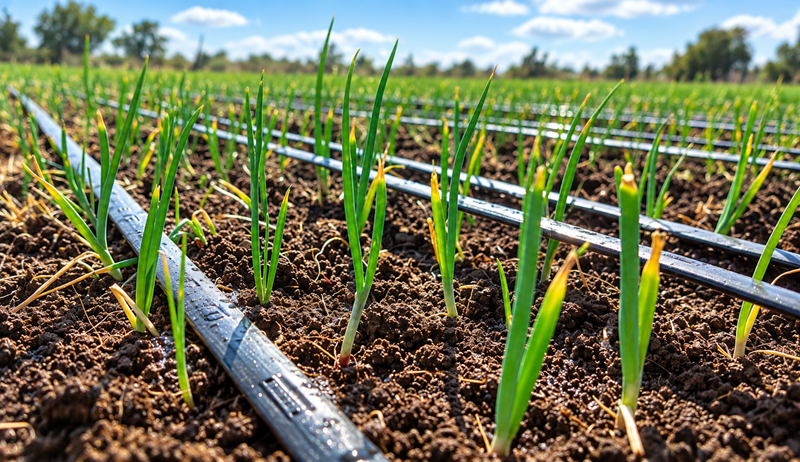
Drip tape is a thinwall polyethylene irrigation tube with emitters or flow channels integrated into the tape at regular intervals. When there is no water pressure, the tape becomes relatively flat. This makes it lightweight, compact and economical to transport and install.
Drip tape is widely used for:
- Vegetables and row crops
- Melons
- Strawberries
- Corn and cotton
- Onions and potatoes
- Other seasonal field crops
Because of its relatively low material cost and easy installation, drip tape is especially suitable for large planting areas where irrigation lines may be replaced after one or several growing seasons.
2. What Is Drip Pipe?
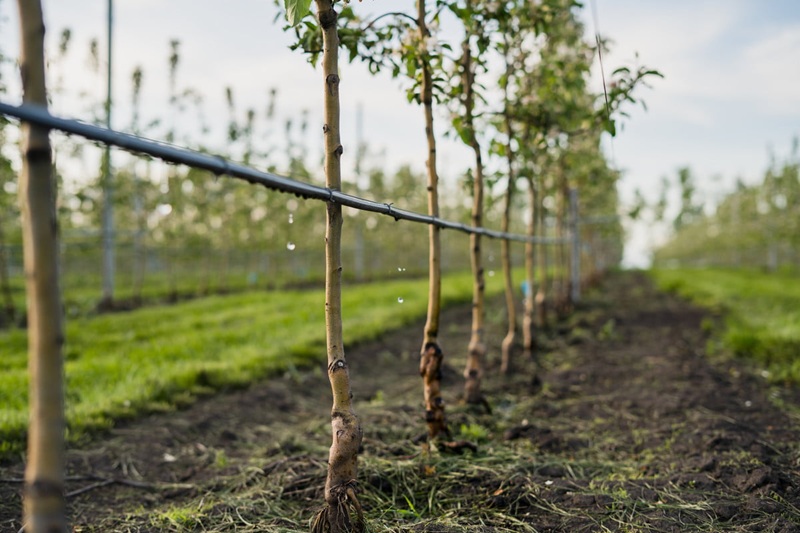
Drip pipe, also commonly called dripline, is a thickerwall polyethylene pipe with integrated emitters installed at predetermined spacing. Unlike thinwall drip tape, drip pipe maintains its round shape and generally provides greater mechanical strength and durability.
Drip pipe is commonly used for:
- Orchards
- Vineyards
- Greenhouses
- Nurseries
- Landscaping
- Perennial and multi-season crops
Drip pipe generally requires a higher initial investment than drip tape, but its longer service life can make it a more suitable choice for permanent or repeated-use irrigation systems.
You can also explore BJLEON's irrigation product range for drip tapes, drip pipes, fittings, valves, filters and related components.
3. Drip Tape vs. Drip Pipe: Key Differences
Wall Thickness
- Drip Tape: Thin-wall construction
- Drip Pipe: Thicker-wall construction
Shape Without Pressure
- Drip Tape: Flat
- Drip Pipe: Round
Durability
- Drip Tape: Lower mechanical strength
- Drip Pipe: Higher mechanical strength
Typical Use
- Drip Tape: Seasonal crops and large-scale row crop irrigation
- Drip Pipe: Multi-season or permanent crops
Initial Cost
- Drip Tape: Generally lower
- Drip Pipe: Generally higher
Installation and Transportation
- Drip Tape: Lightweight, compact and easy to install
- Drip Pipe: More robust but occupies more transportation and storage space
Reuse
- Drip Tape: Depends on wall thickness and field conditions
- Drip Pipe: Generally more suitable for repeated use
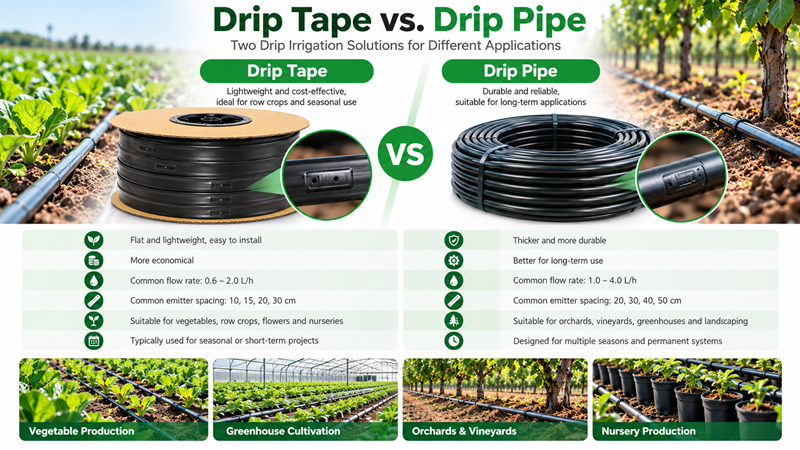
The choice should not be based on price alone. Crop type, planting cycle, water quality, operating pressure, terrain and expected service life should all be considered.
4. Compare Wall Thickness and Durability
Wall thickness is one of the most important differences between drip tape and drip pipe. Drip tape is available in different wall thicknesses depending on the required service life and field conditions.
Thinner tape can reduce material costs, while thicker tape provides better resistance to mechanical damage. Drip pipe uses a heavier PE wall and is generally more resistant to handling, installation and repeated use.
For shortterm seasonal crops, using a heavyduty drip pipe may increase the investment unnecessarily. For orchards or other long-term crops, however, repeatedly replacing thin drip tape may not be economical.
The right choice should therefore consider the total irrigation cost over the expected service life rather than simply the purchase price per meter.
5. Consider Emitter Spacing
Both drip tape and drip pipe can be supplied with different emitter spacings. Depending on the product, common spacing options include 10 cm, 15 cm, 20 cm, 30 cm, 40 cm, 50 cm and 60 cm, as well as customized configurations.
Closer emitter spacing is generally suitable for crops planted at shorter intervals or for soils where water does not spread very far laterally. Wider spacing may be more suitable for crops with larger planting distances.
Emitter spacing should be selected according to:
- Crop spacing
- Soil type
- Root distribution
- Irrigation duration
- Required wetting pattern
6. Compare Emitter Flow Rate
Flow rate determines how much water each emitter supplies during irrigation. Different crops and soil conditions can require different flow rates.
Sandy soil generally has faster infiltration and less lateral water movement, while heavier soils usually absorb water more slowly and allow greater lateral spreading.
Choosing the correct combination of emitter spacing and flow rate is therefore important for achieving uniform irrigation and an appropriate wetting pattern.
7. Check Operating Pressure
Drip tape is generally designed to operate at relatively low pressure. Because its wall is thinner, excessive pressure may damage the tape or affect irrigation performance. Pressure regulation is therefore an important part of drip tape system design.
Drip pipe generally has a stronger structure and may operate across a broader pressure range, depending on its specifications.
For long irrigation lines, uneven terrain or applications requiring more stable emitter performance, pressure-compensating products may also be considered.
8. Installation and Handling
Drip tape is lightweight and compact, making it convenient for largescale installation. It can be laid manually or installed using agricultural machinery, depending on the field and production method.
Because the tape becomes flat when empty, large quantities can also be packed efficiently for transportation and storage.
Drip pipe is heavier and occupies more transportation and storage space, but its stronger structure makes it more suitable for repeated handling and long-term use.
9. Above-Ground or Subsurface Installation?
Drip tape is commonly installed on the soil surface or under plastic mulch for vegetable and field crop production. Certain products can also be used in subsurface drip irrigation systems when properly selected and designed.
Drip pipe is widely used above ground in orchards, greenhouses, nurseries and landscaping. Some dripline products can also be selected for underground applications.
For subsurface systems, factors such as root intrusion, clogging prevention, filtration, flushing and maintenance become especially important.
10. Which One Is More Economical?
Drip tape normally has a lower purchase price per meter than drip pipe, but the cheapest product is not always the most economical solution.
A vegetable grower producing seasonal crops may only need irrigation lines for one or several seasons. In this situation, drip tape can provide an economical solution with relatively low material and installation costs.
An orchard, however, may require the same irrigation system for many years. Installing a more durable drip pipe can reduce replacement labor and material costs over time.
Initial product cost + installation cost + replacement frequency + maintenance cost
Comparing the total cost over the expected service life is usually more useful than comparing only the unit price per meter.
Which Should You Choose?
Choose Drip Tape When:
- Growing seasonal vegetables or field crops
- Irrigating large areas with closely spaced rows
- Lower initial investment is important
- Irrigation lines will be replaced periodically
- Lightweight and fast installation is preferred
Choose Drip Pipe When:
- Growing perennial crops
- Irrigating orchards or vineyards
- Installing greenhouse irrigation systems
- Supplying nurseries or landscaping projects
- Multi-season use is required
- Higher mechanical strength is important
- A more permanent irrigation system is needed
Do Not Forget Filtration
Whether you use drip tape or drip pipe, proper filtration is essential. Drip emitters contain small water passages that can become blocked by sand, suspended particles, organic matter or other contaminants.
Common filtration options include:
- Screen filters
- Disc filters
- Media filters
- Hydrocyclone separators for water containing heavier sand particles
A properly selected filtration and flushing system can improve irrigation reliability and help extend the service life of both drip tape and drip pipe.
If you are still planning the overall irrigation system, read our guide: How to Choose the Right Drip Irrigation System for Your Farm.
Can Drip Tape and Drip Pipe Be Customized?
Yes. For agricultural distributors, importers, greenhouse suppliers and irrigation projects, drip irrigation products can be supplied according to different market and application requirements.
Typical customizable specifications include:
- Pipe or tape diameter
- Wall thickness
- Emitter spacing
- Emitter flow rate
- Roll length
- Working pressure
- Packaging
- Printing and private labeling
Specifications should be selected according to the actual application rather than simply copying a product used in another market. Climate, crop type, soil conditions, water quality, installation method and local farming practices can all affect the ideal configuration.
Choosing Between Drip Tape and Drip Pipe
There is no single answer to whether drip tape or drip pipe is better. Drip tape is usually the more economical choice for seasonal crops and largescale row crop irrigation, while drip pipe is generally better suited to longterm applications where durability and repeated use are important.
The best irrigation solution should balance crop requirements, system pressure, emitter spacing, flow rate, water quality, expected service life and overall project cost.
BJLEON supplies drip irrigation products and related components for agricultural distributors, importers, greenhouse suppliers, growers and irrigation projects. As a Chinabased Agricultural Supply Partner for Global Growers, we help buyers compare specifications, source suitable products and coordinate agricultural sourcing requirements from China.
Need Help Choosing Between Drip Tape and Drip Pipe?
Tell us your crop, planting area, required wall thickness, emitter spacing, flow rate, roll length, quantity and expected service life. BJLEON can help you compare suitable drip irrigation specifications for your market or project.